Project Description
Sealings and Lives of Maresha is a study of imperialism, culture and identity in the eastern Mediterranean between 250-100 BCE. It takes as its core a new, unpublished archive of just over 1000 clay sealings from the UNESCO world heritage site of Maresha (Israel). These small pieces of unfired clay, used to seal long-perished documents and discovered in an underground storage room, bear the impressions of the seals of private individuals and officials active in Maresha in the second century BCE. This was a time of unprecedented growth and connectivity: in the centuries following the conquests of Alexander the Great, Maresha and the surrounding region of Idumea were integrated into networks of trade and exchange that spanned the Mediterranean and Near East, and people from all over the eastern Mediterranean seaboard made the city their home. Although the documents and seals themselves are lost, the sealings are a treasure trove of information about trade and exchange, local and imperial administration, and individual identity. Their iconography stems from the Greek, Phoenician and Near Eastern visual repertoire, often with the names of their owners inscribed in Greek or Aramaic offering insights into the cultural choices of individuals and groups at Maresha. Impressions from official seals also preserve dates and titles, informing us about processes of imperial and local administration. Additionally, the clay of the sealings offers important clues about how far they travelled and hence the socio-economic networks of the seals’ owners. Overall, the sealings offer us a direct spotlight into the vibrant and culturally complex world of the late Hellenistic Levant.
In addition, as one of very few archives recovered from the Seleucid empire, the Maresha sealings also add significantly to our understanding of Hellenistic imperialism and local responses: they reveal local administrative processes not captured by imperial archives, and form a critical point of comparison for other private archives. Bringing together an international and interdisciplinary team of historians and archaeologists, this project will offer the first publication and comprehensive analysis of the archive, and pursue the following research questions:
- What does the composition of both the archive and the assemblage in the room suggest about the status, reach and connections of its owners within and beyond Maresha?
- What do the iconographic motifs present in the seal impressions suggest about self-representation and cultural identity at Maresha?
- How typical is the archive from Maresha compared to others in the Hellenistic East?
- How far can the footprint of empire be felt in local archives, and what does this tell us about Hellenistic imperialism?
Our project will substantially advance our understanding of imperial interventions, local responses and individual identities—in short, the reality of empire on the ground—in the Hellenistic Levant, while ensuring that this crucial body of material is preserved for the future and accessible to specialists and general audiences alike.
Project Description
Sealings and Lives of Maresha is a study of imperialism, culture and identity in the eastern Mediterranean between 250-100 BCE. It takes as its core a new, unpublished archive of just over 1000 clay sealings from the UNESCO world heritage site of Maresha (Israel). These small pieces of unfired clay, used to seal long-perished documents and discovered in an underground storage room, bear the impressions of the seals of private individuals and officials active in Maresha in the second century BCE. This was a time of unprecedented growth and connectivity: in the centuries following the conquests of Alexander the Great, Maresha and the surrounding region of Idumea were integrated into networks of trade and exchange that spanned the Mediterranean and Near East, and people from all over the eastern Mediterranean seaboard made the city their home. Although the documents and seals themselves are lost, the sealings are a treasure trove of information about trade and exchange, local and imperial administration, and individual identity. Their iconography stems from the Greek, Phoenician and Near Eastern visual repertoire, often with the names of their owners inscribed in Greek or Aramaic offering insights into the cultural choices of individuals and groups at Maresha. Impressions from official seals also preserve dates and titles, informing us about processes of imperial and local administration. Additionally, the clay of the sealings offers important clues about how far they travelled and hence the socio-economic networks of the seals’ owners. Overall, the sealings offer us a direct spotlight into the vibrant and culturally complex world of the late Hellenistic Levant.
In addition, as one of very few archives recovered from the Seleucid empire, the Maresha sealings also add significantly to our understanding of Hellenistic imperialism and local responses: they reveal local administrative processes not captured by imperial archives, and form a critical point of comparison for other private archives. Bringing together an international and interdisciplinary team of historians and archaeologists, this project will offer the first publication and comprehensive analysis of the archive, and pursue the following research questions:
- What does the composition of both the archive and the assemblage in the room suggest about the status, reach and connections of its owners within and beyond Maresha?
- What do the iconographic motifs present in the seal impressions suggest about self-representation and cultural identity at Maresha?
- How typical is the archive from Maresha compared to others in the Hellenistic East?
- How far can the footprint of empire be felt in local archives, and what does this tell us about Hellenistic imperialism?
Our project will substantially advance our understanding of imperial interventions, local responses and individual identities—in short, the reality of empire on the ground—in the Hellenistic Levant, while ensuring that this crucial body of material is preserved for the future and accessible to specialists and general audiences alike.
Meet the Team
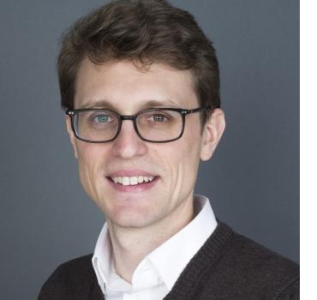 Dr. Boris Chrubasik (University of Toronto) is an expert on the Seleucid empire. He has developed new models for understanding both Seleucid imperialism (Chrubasik 2016) and cultural exchange in the Eastern Mediterranean (Chrubasik and King 2017) and successfully applied these models to several microstudies of empire in the Hellenistic Levant (Chrubasik 2017; idem 2019; idem 2021). His expertise in imperialism and cultural exchange is crucial for the historical strand of the project, which will require an in-depth knowledge of both local realities and broader imperial processes in order to reach a full understanding of the archive’s context and function.

Dr. Kathryn Stevens (Corpus Christi College, Oxford University) is a Hellenistic historian and Assyriologist who specialises in Seleucid Babylonia and has published on cross-cultural exchange (Stevens 2019), and local responses to empire (Stevens 2014; 2016; Stevens 2019; Stevens forthcoming). She also has experience working with digital corpora and databases (ORACC). Dr. Stevens takes part in the fieldwork in Israel and collaborates on the edition of both volumes, contributing iconographic analysis and historical commentaries of the sealings.
 Dr. Ian Stern (Hebrew Union College) is the director of the Maresha archaeological expedition on behalf of the University of Haifa and Hebrew Union College and the permit holder of the excavation. He has led the excavations at Maresha since 2000 and published extensively on the multicultural nature of Hellenistic Maresha (e.g. Stern 2007, idem 2019b). His ongoing fieldwork allows him to investigate the complex and ever-changing interactions of the various ethnic groups that resided in this city and region. He continues to research and publish the large and diverse material cultural assemblage that appears to reflect a hybridized communal identity. As head of the excavation and the archaeologist who discovered the archive, he is responsible for the research and publication of the archaeological context on the archive. Dr. Stern contributes to the supervision of the project’s technicians and research assistants in Israel and is the primary contact with the Israel Antiquities Authority.
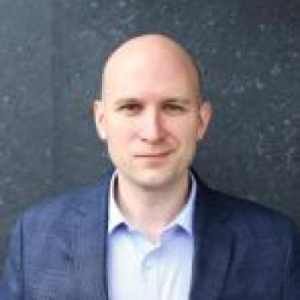
Dr. Chris J. Young (University of Toronto) is the Head, Collections and Digital Scholarship at the University of Toronto Mississauga Library. He brings experience in research data management, digitization and preservation, database architecture, metadata standards, open access scholarship, and knowledge mobilization. His work on previous SSHRC projects has resulted in open access data (Young, Nieborg and Joseph 2019), an edited journal special issue (Young and de Peuter 2019), and a public forum on policy in digital media (CWO, 2019).
 Dr. Donald T. Ariel (Israel Antiquities Authority, emeritus) was the head of the Coin Department of the Israel Antiquities Authority from 1989 until his retirement in 2021. He has worked as a coin specialist with several expeditions in Israel, including Sepphoris, Megiddo, and Bethsaida. Dr. Ariel is also an expert on ancient stamps and sealings (Ariel, Sharon, Gunneweg, and Perlman 1985; Ariel 2006, 2019). He contributed to the study, analysis, and final publication of the sealings from the Hellenistic archive at Tel Kedesh, as part of the University of Michigan and University of Minnesota excavations (Herbert 2023). The sealings from Tel Kedesh provide a geographic, chronological, and contextual parallel to the collection from Maresha. Dr. Ariel oversees the analysis and recording of the SLiM sealings in Israel, which form the basis of the database and the publication volume.
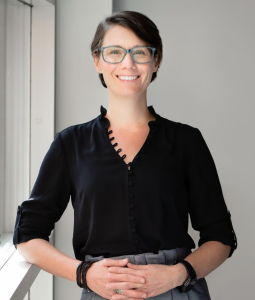
Dr. Lana Radloff (University of Toronto) is a Mediterranean archaeologist specializing in maritime landscapes above and below the water. She has participated in fieldwork in Bulgaria, Greece, Turkey, and Cyprus, concentrating on harbors, islands, shipwrecks, domestic arcchitecture, fortifications, and urban planning. Dr. Radloff's current research project is FemiNetworX, mapping female maritime mobility networks, with a focus on ancient Miletus in the southeast Aegean and the Eastern Mediterranean. In past and present, women account for a significant portion of displaced individuals, leadning to a "feminization of migration," but the connection between feminism and migration is underexplored. FemiNetworX aims to address this lacuna by modelling women's mobility networks on the sea with spatial analysis in GIS and social network analysis in R programming. Dr. Radloff is the Project Manager of the SLiM project and a Research Associate at the University of Toronto. Her role is to manage and push forward the vision of the research project.
 Alison Cleverley (University of Toronto) is a PhD student in the Department ofr the Study of Religion at the University of Toronto, where she is studying the administration of temples and festivals in the late-Hellenistic to early-Imperial Asia Minor. Her PhD journey includes a collaborative PhD program in U of T's Centre for Jewish Studies, and she spent the first years of her PhD being training in the Ancient History program in U of T's Classics Department. Alison is a graduate research assistant for the SLiM project.
Meet the Team
Dr. Boris Chrubasik (University of Toronto) is an expert on the Seleucid empire. He has developed new models for understanding both Seleucid imperialism (Chrubasik 2016) and cultural exchange in the Eastern Mediterranean (Chrubasik and King 2017) and successfully applied these models to several microstudies of empire in the Hellenistic Levant (Chrubasik 2017; idem 2019; idem 2021). His expertise in imperialism and cultural exchange is crucial for the historical strand of the project, which will require an in-depth knowledge of both local realities and broader imperial processes in order to reach a full understanding of the archive’s context and function.
Dr. Kathryn Stevens (Corpus Christi College, Oxford University) is a Hellenistic historian and Assyriologist who specialises in Seleucid Babylonia and has published on cross-cultural exchange (Stevens 2019), and local responses to empire (Stevens 2014; 2016; Stevens 2019; Stevens forthcoming). She also has experience working with digital corpora and databases (ORACC). Dr. Stevens takes part in the fieldwork in Israel and collaborates on the edition of both volumes, contributing iconographic analysis and historical commentaries of the sealings.
Dr. Ian Stern (Hebrew Union College) is the director of the Maresha archaeological expedition on behalf of the University of Haifa and Hebrew Union College and the permit holder of the excavation. He has led the excavations at Maresha since 2000 and published extensively on the multicultural nature of Hellenistic Maresha (e.g. Stern 2007, idem 2019b). His ongoing fieldwork allows him to investigate the complex and ever-changing interactions of the various ethnic groups that resided in this city and region. He continues to research and publish the large and diverse material cultural assemblage that appears to reflect a hybridized communal identity. As head of the excavation and the archaeologist who discovered the archive, he is responsible for the research and publication of the archaeological context on the archive. Dr. Stern contributes to the supervision of the project’s technicians and research assistants in Israel and is the primary contact with the Israel Antiquities Authority.
Dr. Chris J. Young (University of Toronto) is the Head, Collections and Digital Scholarship at the University of Toronto Mississauga Library. He brings experience in research data management, digitization and preservation, database architecture, metadata standards, open access scholarship, and knowledge mobilization. His work on previous SSHRC projects has resulted in open access data (Young, Nieborg and Joseph 2019), an edited journal special issue (Young and de Peuter 2019), and a public forum on policy in digital media (CWO, 2019).
Dr. Donald T. Ariel (Israel Antiquities Authority, emeritus) was the head of the Coin Department of the Israel Antiquities Authority from 1989 until his retirement in 2021. He has worked as a coin specialist with several expeditions in Israel, including Sepphoris, Megiddo, and Bethsaida. Dr. Ariel is also an expert on ancient stamps and sealings (Ariel, Sharon, Gunneweg, and Perlman 1985; Ariel 2006, 2019). He contributed to the study, analysis, and final publication of the sealings from the Hellenistic archive at Tel Kedesh, as part of the University of Michigan and University of Minnesota excavations (Herbert 2023). The sealings from Tel Kedesh provide a geographic, chronological, and contextual parallel to the collection from Maresha. Dr. Ariel oversees the analysis and recording of the SLiM sealings in Israel, which form the basis of the database and the publication volume.
Dr. Lana Radloff (University of Toronto) is a Mediterranean archaeologist specializing in maritime landscapes above and below the water. She has participated in fieldwork in Bulgaria, Greece, Turkey, and Cyprus, concentrating on harbors, islands, shipwrecks, domestic arcchitecture, fortifications, and urban planning. Dr. Radloff's current research project is FemiNetworX, mapping female maritime mobility networks, with a focus on ancient Miletus in the southeast Aegean and the Eastern Mediterranean. In past and present, women account for a significant portion of displaced individuals, leadning to a "feminization of migration," but the connection between feminism and migration is underexplored. FemiNetworX aims to address this lacuna by modelling women's mobility networks on the sea with spatial analysis in GIS and social network analysis in R programming. Dr. Radloff is the Project Manager of the SLiM project and a Research Associate at the University of Toronto. Her role is to manage and push forward the vision of the research project.
Alison Cleverley (University of Toronto) is a PhD student in the Department ofr the Study of Religion at the University of Toronto, where she is studying the administration of temples and festivals in the late-Hellenistic to early-Imperial Asia Minor. Her PhD journey includes a collaborative PhD program in U of T's Centre for Jewish Studies, and she spent the first years of her PhD being training in the Ancient History program in U of T's Classics Department. Alison is a graduate research assistant for the SLiM project.
Funding Bodies & Partners
We are thankful for the partners and institutions that helped make the Sealings and Lives of Maresha Project possible.

Funding Bodies & Partners
We are thankful for the partners and institutions that helped make the Sealings and Lives of Maresha Project possible.
Institutions


Institutions
Other Supporters


Other Supporters