Apollo, a Date, and a Piece of Clay
By Alison Cleverley
|
|
 |
|
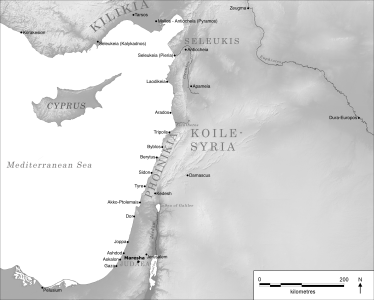
An image of a map showing Maresha in the Levant. We’re looking at the city of Maresha, the capital of Idumea, in the Southern Levant. Map by Boris Chrubasik. |
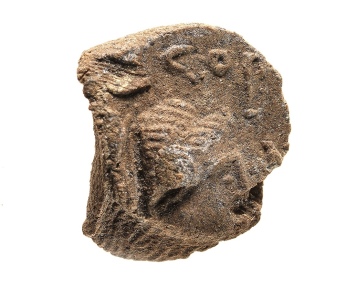
Archaeologists and historians are deciphering this little piece of clay to unlock secrets from over 2000 years ago. Although a small and misshapen piece, this task is possible because the clay object sealed a document, authenticating that the document was sealed by its owner. One of about a thousand seal-impressions found in a cave, this one holds particular importance for understanding the existence of a document archive at Maresha. By examining the markings and comparing the shape, size, and composition of the clay to other seal impressions, it is possible to learn about the archive, its documents, and the people who wrote them. This is what the Sealings and Lives of Maresha project is working on.
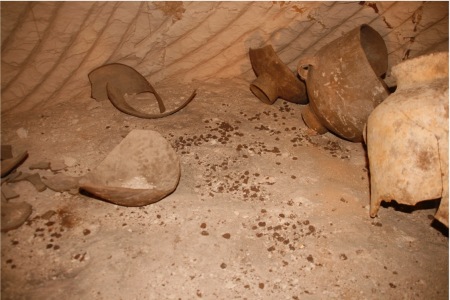
This “secret cave” was part of a wing of nine underground rooms, which had been undisturbed for the past two millennia when, in August 2018, Maresha’s head archaeologist Ian Stern and his team enlarged a small opening in a wall and discovered the rooms. Although originally this wing of the labyrinthine underground cave complex would have been accessible to the wealthy inhabitant of the house above, at some point in antiquity it was closed. “The following day, we returned with proper lighting, and Asaf Stern, our photographer, entered Room 67 and emerged holding clay lumps that we immediately recognized as impressed sealings [a synonym for seal impressions],” Stern remembers. The papyri documents they were attached to had long since decomposed.
 |
|
The sealings on the floor of the cave. One of those lumps of clay is SMar_0070 before being carefully collected, cleaned, and photographed. The broken jars were likely used for storage of the documents. Photo by Asaf Stern. |
We can see in the photo that the clay still looks sandy today, and the bottom right of the seal impression shows some signs of its fragile state. When asked how gritty they had looked, Stern replied: “When we first found the sealings, various images were visible, though most displayed differing degrees of white powdery encrustation from the archive floor.” The act of collecting these seal impressions was complicated: they had to be handled very carefully, since the clay is unfired. Ancient archives rarely survive the from the ancient world, and if they do, they most often survive because the archive was destroyed in a fire, burning away the papyri documents but hardening the sealings, similar to firing the clay of a bowl that was thrown on a pottery wheel. Although the collection from Maresha is remarkable for its preservation and size amongst other similar collections, the seal impressions crumble under even small amounts of pressure. As Stern says, “We collected 1,027 delicate sealings, representing the largest private archive discovered in the Levant.” As they were cleaned, photographed, and commented upon each sealing was given a number. This one has the romantic name of SMar_0070 (which stands for Sealings Maresha 70).
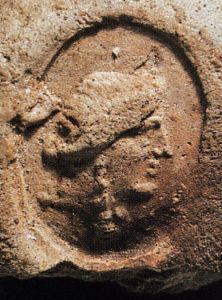
The image we are looking at on seal impression 70 is a profile of the Greek god Apollo, wearing a diadem (a headband) over individually etched strands of hair. Donald T. Ariel, the specialist examining these seal impressions, studied and identified the images. Through comparison with the archive’s collection as a whole, it is possible to see that Apollo was a popular choice on seals, but that the seal impressions are still individuated since Apollos appear in many different poses, including both standing and as busts.
 |
 |
 |
|
ApT19. This image was one of the comparative images against which SMar_0070 can be identified as Apollo. Citation: a cura di Antonio Invernizzi. 2004. Seleucia al Tigri: Le impronte di sigillo dagli Archivi. Alessandria: Edizioni dell’Orso. |
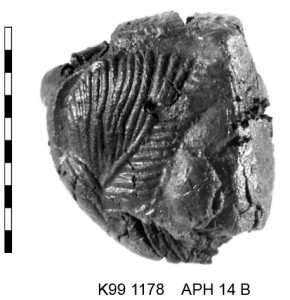
K99 1178 APH 14 B. This is another comparison, from nearby Kedesh (north of Maresha), of a similar Apollo head. Citation: Sharon Herbert. 2023. University of Michigan and University of Minnesota Excavations at Tel Kedesh I: The Hellenistic Archive and Its Sealings. Alexandria: American Society of Overseas Research. |
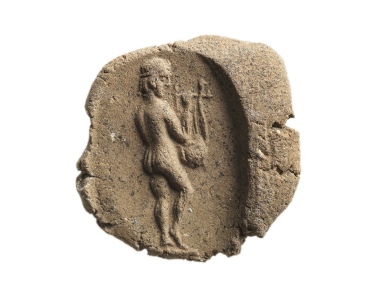
SMar_0910. As another comparison from within the Maresha collection, this well-preserved seal impression depicts an Apollo holding a Cithara (an ancient stringed instrument). Photo by Clara Amit. |
Despite depicting a frequently chosen god, the seal impression 70 is special within the collection because there are several others like it. It is one of eleven impressions in the Maresha archive that was made by the same seal. Ariel suggests this “probably means that the owner of the house above [the archive] made/stored contracts 11 times with the owner of the seal.” Eleven is one of the highest numbers of repeated uses of a seal in this collection—most of the other seal impressions from Maresha that have copies only have two matching seal impressions, meaning they were from seals that were used only twice. This tells us the archive represented contacts between many people, but also that some people—like the owner of this Apollo seal—had repeated dealings with the archive.
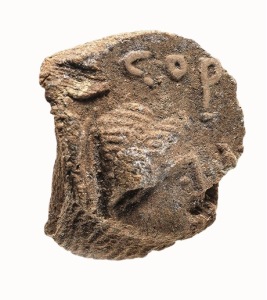 |
| This is SMar_0070 with highlights over the date (ςορ) to make it a little easier to see. |
There is another reason why this Apollo seal impression is important for understanding the collection as a whole: above the head of Apollo is a date. Looking closely across the top we can see Lςορ. The L is a symbol standing for 'year'; the letters following the L are the date, in this case 'year 176' in the Seleukid Era (the Seleukid kingdom ruled over an empire that included Maresha at this time), which translates to 137/6 BCE in our dating system. This is the earliest date found in this archive. Missing from SMar_0070 where it’s damaged at the top left is an L, which is a common symbol for ‘year’ in this ancient dating system. From the dates on the seal impressions that authenticated the documents of the Maresha archive, we can better understand the time of the documents that were stored there and the dating of the settlement of Maresha more broadly.
So far the sealings have been collected and categorized, but the Sealings and Lives of Maresha project still has many intriguing questions to answer about the seal impressions. For example, were the seal impressions attached to documents written in Maresha or sent from elsewhere? Were the seals, which were used to make these seal impressions, stamps or jewellery such as pendants strung on necklaces or rings? We can begin to gain some insights into the owners of the seals from the iconography they chose. “The symbol of the head of Apollo must have had some meaning to its owner,” Ariel affirms, perhaps a favourite god or a protective family deity.
In the next blog post we’ll examine a seal impression with an image of Aphrodite and discuss why the Greek pantheon was so popular in this Maresha archive.
Apollo, a Date, and a Piece of Clay
By Alison Cleverley
|
|
|
|
An image of a map showing Maresha in the Levant. We’re looking at the city of Maresha, the capital of Idumea, in the Southern Levant. Map by Boris Chrubasik. |
Archaeologists and historians are deciphering this little piece of clay to unlock secrets from over 2000 years ago. Although a small and misshapen piece, this task is possible because the clay object sealed a document, authenticating that the document was sealed by its owner. One of about a thousand seal-impressions found in a cave, this one holds particular importance for understanding the existence of a document archive at Maresha. By examining the markings and comparing the shape, size, and composition of the clay to other seal impressions, it is possible to learn about the archive, its documents, and the people who wrote them. This is what the Sealings and Lives of Maresha project is working on.
This “secret cave” was part of a wing of nine underground rooms, which had been undisturbed for the past two millennia when, in August 2018, Maresha’s head archaeologist Ian Stern and his team enlarged a small opening in a wall and discovered the rooms. Although originally this wing of the labyrinthine underground cave complex would have been accessible to the wealthy inhabitant of the house above, at some point in antiquity it was closed. “The following day, we returned with proper lighting, and Asaf Stern, our photographer, entered Room 67 and emerged holding clay lumps that we immediately recognized as impressed sealings [a synonym for seal impressions],” Stern remembers. The papyri documents they were attached to had long since decomposed.
| |
|
The sealings on the floor of the cave. One of those lumps of clay is SMar_0070 before being carefully collected, cleaned, and photographed. The broken jars were likely used for storage of the documents. Photo by Asaf Stern. |
We can see in the photo that the clay still looks sandy today, and the bottom right of the seal impression shows some signs of its fragile state. When asked how gritty they had looked, Stern replied: “When we first found the sealings, various images were visible, though most displayed differing degrees of white powdery encrustation from the archive floor.” The act of collecting these seal impressions was complicated: they had to be handled very carefully, since the clay is unfired. Ancient archives rarely survive the from the ancient world, and if they do, they most often survive because the archive was destroyed in a fire, burning away the papyri documents but hardening the sealings, similar to firing the clay of a bowl that was thrown on a pottery wheel. Although the collection from Maresha is remarkable for its preservation and size amongst other similar collections, the seal impressions crumble under even small amounts of pressure. As Stern says, “We collected 1,027 delicate sealings, representing the largest private archive discovered in the Levant.” As they were cleaned, photographed, and commented upon each sealing was given a number. This one has the romantic name of SMar_0070 (which stands for Sealings Maresha 70).
The image we are looking at on seal impression 70 is a profile of the Greek god Apollo, wearing a diadem (a headband) over individually etched strands of hair. Donald T. Ariel, the specialist examining these seal impressions, studied and identified the images. Through comparison with the archive’s collection as a whole, it is possible to see that Apollo was a popular choice on seals, but that the seal impressions are still individuated since Apollos appear in many different poses, including both standing and as busts.
|
|
|
|
ApT19. This image was one of the comparative images against which SMar_0070 can be identified as Apollo. Citation: a cura di Antonio Invernizzi. 2004. Seleucia al Tigri: Le impronte di sigillo dagli Archivi. Alessandria: Edizioni dell’Orso. |
K99 1178 APH 14 B. This is another comparison, from nearby Kedesh (north of Maresha), of a similar Apollo head. Citation: Sharon Herbert. 2023. University of Michigan and University of Minnesota Excavations at Tel Kedesh I: The Hellenistic Archive and Its Sealings. Alexandria: American Society of Overseas Research. |
SMar_0910. As another comparison from within the Maresha collection, this well-preserved seal impression depicts an Apollo holding a Cithara (an ancient stringed instrument). Photo by Clara Amit. |
Despite depicting a frequently chosen god, the seal impression 70 is special within the collection because there are several others like it. It is one of eleven impressions in the Maresha archive that was made by the same seal. Ariel suggests this “probably means that the owner of the house above [the archive] made/stored contracts 11 times with the owner of the seal.” Eleven is one of the highest numbers of repeated uses of a seal in this collection—most of the other seal impressions from Maresha that have copies only have two matching seal impressions, meaning they were from seals that were used only twice. This tells us the archive represented contacts between many people, but also that some people—like the owner of this Apollo seal—had repeated dealings with the archive.
|
| This is SMar_0070 with highlights over the date (ςορ) to make it a little easier to see. |
There is another reason why this Apollo seal impression is important for understanding the collection as a whole: above the head of Apollo is a date. Looking closely across the top we can see Lςορ. The L is a symbol standing for 'year'; the letters following the L are the date, in this case 'year 176' in the Seleukid Era (the Seleukid kingdom ruled over an empire that included Maresha at this time), which translates to 137/6 BCE in our dating system. This is the earliest date found in this archive. Missing from SMar_0070 where it’s damaged at the top left is an L, which is a common symbol for ‘year’ in this ancient dating system. From the dates on the seal impressions that authenticated the documents of the Maresha archive, we can better understand the time of the documents that were stored there and the dating of the settlement of Maresha more broadly.
So far the sealings have been collected and categorized, but the Sealings and Lives of Maresha project still has many intriguing questions to answer about the seal impressions. For example, were the seal impressions attached to documents written in Maresha or sent from elsewhere? Were the seals, which were used to make these seal impressions, stamps or jewellery such as pendants strung on necklaces or rings? We can begin to gain some insights into the owners of the seals from the iconography they chose. “The symbol of the head of Apollo must have had some meaning to its owner,” Ariel affirms, perhaps a favourite god or a protective family deity.
In the next blog post we’ll examine a seal impression with an image of Aphrodite and discuss why the Greek pantheon was so popular in this Maresha archive.